A Predictably Selective Aliphatic C–H Oxidation Reaction for Complex Molecule Synthesis
Mark S. Chen, M. Christina White
Science · 2007 · 10.1126/science.1148597
Abstract
Realizing the extraordinary potential of unactivated sp 3 C–H bond oxidation in organic synthesis requires the discovery of catalysts that are both highly reactive and predictably selective. We report an iron (Fe)–based small molecule catalyst that uses hydrogen peroxide (H 2 O 2 ) to oxidize a broad range of substrates. Predictable selectivity is achieved solely on the basis of the electronic and steric properties of the C–H bonds, without the need for directing groups. Additionally, carboxylate directing groups may be used to furnish five-membered ring lactone products. We demonstrate that these three modes of selectivity enable the predictable oxidation of complex natural products and their derivatives at specific C–H bonds with preparatively useful yields. This type of general and predictable reactivity stands to enable aliphatic C–H oxidation as a method for streamlining complex molecule synthesis.
Community reviews (1)
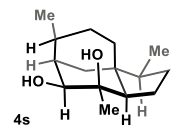
Amber et al. reported (An “Inside-Out” Strategy Enables a 14-Step Total Synthesis of Hispidospermidin) that the undirected C–H oxidation conditions of White and Chen, applied to substrate 4s in the total synthesis of hispidospermidin, led to oxidative cleavage of the hydroxyketone rather than the desired C–H functionalization. Reaction scale was not stated.
Save to Library
Report a bug
Describe the problem: wrong title, missing abstract, incorrect authors, or anything else that looks off.