Photoredox Csp3−Csp2 Reductive Cross‐Couplings of Cereblon Ligands for PROTAC Linker Exploration in Batch and Flow
Alexander Steiner, Johannes Krieger, Reinaldo Jones, Dietrich Böse, Yanping Wang, Hans‐Michael Eggenweiler, Jason D. Williams, C. Oliver Kappe
ChemCatChem · 2022 · 10.1002/cctc.202201184
Abstract
Proteolysis‐targeting chimeras (PROTACs) have recently emerged as powerful molecules for targeted protein degradation. As such, synthetic methods for their modular synthesis are of prime importance in medicinal chemistry. We report the development of both batch and flow photoredox methodologies for Csp3−Csp2 cross‐electrophile couplings of alkyl bromides with E3 ligase‐binding aryl bromides (thalidomide and lenalidomide derivatives). Despite the challenging reaction system, containing several insoluble species, conditions were discovered to facilitate stable processing in an oscillatory flow photochemical reactor. The flow approach can enable processing of larger material quantities in a shorter time period. A range of saturated linker molecules, with various functional handles, were successfully combined with four ligand variants using the developed conditions. Finally, scalability in batch and use of an organic photocatalyst were explored.
Community reviews (1)
Compound 3da' was prepared according to the reported procedure. The reaction was carried on a 5mmol scale, following the batch scale up procedure.
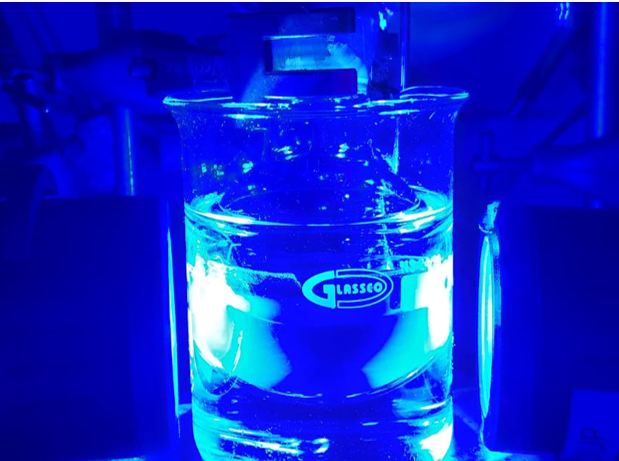
Two Kessil Tuna blue lights were used instead (see below). The desired product was obtained in 53% yield over 2 steps.
Save to Library
Report a bug
Describe the problem: wrong title, missing abstract, incorrect authors, or anything else that looks off.